Construction and trades
Roofing company video ideas: storm questions, replacement progress and cleanup
For local roofers: storm-response posts, estimate explainers and replacement updates that show the work without promising insurance coverage.
For landscape designers, installers and maintenance crews, these landscaping video ideas answer site questions. Get ten clip outlines, local posting cues, checks for honest portfolio claims and a backyard brief. Document real work with your photos or filmed clips; use labelled drawings to explain services.
Choose a question delaying a booking. These panels and posting cues are editorial suggestions, not performance predictions. Keep job evidence separate from illustrations.
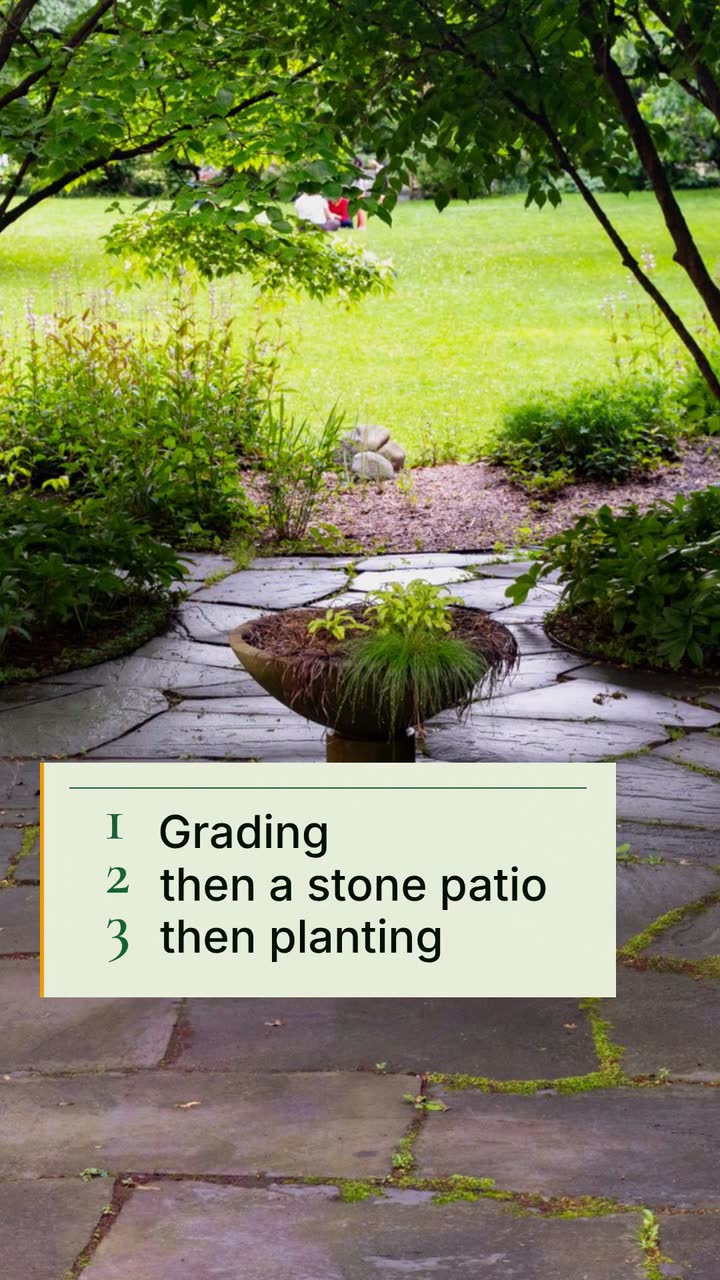
Explain preparation, paving and planting in the order your crew performed them on a completed job. Include overlooked scope, such as debris removal or access protection. The phases explain what happens, not how long another yard takes. Publish when quoting similar work.
Try this: Try the Project showcase template (Progress poster version), an example brief and storyboard. Name work outside your contract.
Project showcase · Progress poster posterPair real views from the same position. Date installation and the later photo; note intervening maintenance. If you draw the problem and solution instead, label both as illustrations. Do not invent a damaged lawn to replace a missing before photo.
Try this: Try the Service offer template (Before and after version) for a labelled path-to-seating-area illustration. Publish job photos separately.
Service offer · Before and after buildShow one plant from an actual planting list, with its name, intended location and verified mature spread. Explain which site conditions you checked. USDA hardiness zones concern winter cold; light and soil moisture also matter (USDA). Outside the U.S., consult local horticultural guidance rather than treating that map as a global suitability test.
Try this: Film the plant yourself. Confirm cultivar details with your nursery; do not identify species from a generic drawn leaf.
Explain the beds or lawn areas your proposal covers, where the controls sit and who handles the handover. EPA says average U.S. household outdoor water use exceeds showering and clothes washing combined (WaterSense); that is context, not a savings forecast. If you discuss water needs, note that new trees and shrubs normally need establishment irrigation (EPA).
Try this: Post when clients ask about ongoing care. Offer a site-specific assessment, not a bill-reduction promise.
For a U.S. project, explain that free 811 requests mark approximate buried-utility locations. Contact the service a few business days ahead and wait for utility responses before digging (811). Check current state requirements, including the waiting period; a video is not digging clearance. Elsewhere, confirm the local utility-location process.
Try this: Before installation, film the marks without revealing the address. Explain the wait; do not demonstrate excavation.
When local leaf fall creates demand, state whether the quote covers lawns, planted beds, hauling and disposal. Say how wet leaves, access or extra visits affect the quote. Offer aeration or overseeding separately only when appropriate to the site and local guidance; do not present them as automatic fall tasks for every lawn.
Try this: Try the Seasonal store template (Fall version): replace products with included tasks. State a real deadline and check capacity.
Seasonal store · Fall posterExplain the actual deliverable: a discussion, measurements, sketch or written proposal. State the visit fee and whether it is credited against later work. Identify separate surveys or specialist assessments. Put this clip where you invite bookings.
Try this: Show what to prepare, what you discuss and what you deliver. Close with the service area and booking method.
Distinguish mowing, edging, weeding and clearing hard surfaces. Show where the agreed scope stops: shrub pruning, waste removal or irrigation repairs may be separate. State visit frequency and how weather changes are communicated. Avoid filming a route that reveals addresses.
Try this: When opening a route slot, name the neighbourhood and scope. Show a checklist, not unrelated yards.
Compare two materials you install for the same proposed area. Use supplier information and your quotes for one cost or care difference. Identify shared excavation or base work and access constraints. Material price alone is not a project price.
Try this: Answer a material question delaying a proposal. State your assumptions rather than claiming “always cheaper”.
With permission, reproduce a real client’s words without changing their meaning and pair them with that client’s job. The U.S. FTC rule addresses fake reviews, sentiment-conditioned rewards and certain undisclosed insider testimonials (FTC). Check current rules and the posting platform’s policy before requesting or reusing reviews; this is not legal advice.
Try this: Ask for honest feedback at handover. Follow up on establishment later; do not wait for positive results to ask.
Use these cues as a planning worksheet. Check local horticultural advice before offering seasonal treatments. Northern and southern seasons fall in different months, and rainy or dry periods may be more useful cues than spring and fall.
| Local cue | Check before publishing | Clip to prepare |
|---|---|---|
| You are opening design bookings | Crew availability, service area and visit fee | What a design visit includes; phases of a comparable job |
| An installation is scheduled | Client permission and utility-location process | The flags before the first shovel |
| A planting is established enough to revisit | Photo dates, plant identity and actual care provided | One plant, one place it belongs; dated before-and-after |
| Clients ask about watering | Current restrictions from the water authority; your installation scope | What the irrigation line on your quote buys |
| Leaves are falling locally | Included areas, disposal, access and booking capacity | A leaf-cleanup offer with a boundary |
| A maintenance route has an opening | Neighbourhood served, frequency and excluded tasks | What a maintenance visit leaves finished |
Use this as a review checklist, not legal advice. Check current requirements with the relevant licensing authority, water provider or regulator for the place where you work. Do not assume that adding a detail to the post text satisfies an advertising rule.
Terra Garden Design is invented. The Project showcase template (Progress poster version) is an example brief and storyboard. This illustration invites a visit; it does not document a finished job.
Make a 15 s illustrated backyard makeover video for Terra Garden Design. Show site preparation, a stone patio, then planting with drip irrigation. The planting plan uses plants native to the project region, selected after a site visit. Use simple shapes and large phase labels; keep “Illustration” visible. Close with “Book a garden design visit” and the business name. Vertical 9:16. Brand colours #166534, #f59e0b and #f7fee7. Music and sound effects, no narration.
| When | On screen | Why |
|---|---|---|
| 0–2 s | “Backyard makeover” above a simple yard outline; small “Terra Garden Design” and a persistent “Illustration” label. | Introduce the service as an illustration. |
| 2–5 s | Panel 01: the yard outline with preparation marks; “Site preparation”. | Avoid implying identical grading needs. |
| 5–8 s | Panel 02: stone shapes form a seating area; “Stone patio”. | One phase and one main label. |
| 8–11 s | Panel 03: plant shapes and a simple irrigation line; “Planting + drip irrigation”. | Keep scope readable; do not imply species identification. |
| 11–15 s | “Book a garden design visit” and “Terra Garden Design”; the illustration label remains. | The business’s own invitation. |
| Outro | The ProcVideos outro closes the video. | |
Each generation differs; review and regenerate with feedback if needed. Keep “Illustration” readable on a phone. Videos Creator is coming soon to Attain OS. See how it works.
Try a brief like this one
Videos Creator is coming to Attain OS. You can create your Attain OS account today.
At handover, record the agreed scope, a question the homeowner asked and the date of your photos. Confirm publication permission and remove identifying details. Choose the idea that answers that question; keep the invoice, plant list or supplier note behind any factual claim.
Draft the clip and its companion caption together. The caption should name the service area, scope limits and one action, such as requesting a design visit. Preview on a phone with sound off: if the task or invitation is unclear, cut a panel rather than shrink the text.
Pick an existing channel where your own enquiries arrive, such as Instagram or Facebook; do not assume one platform suits every neighbourhood. Record which service each enquiry concerns and whether it is in your area. Use that information to choose the next clip. The small-business video calendar helps organise posts; the remodeling project guide covers a larger build story.
Use the finished-yard photo and explain the scope in the caption. A labelled diagram can explain what changed, but it cannot establish the original condition. Do not fabricate a before view or imply that a drawn result is a photograph.
As a starting point, choose 10 or 15 s for a single service question, and 20 or 30 s for a phased explanation. These are the fixed Procedural Videos lengths, not a claim about optimal reach. If labels feel crowded, simplify the scope. Film a separate walk-around for details that need more time.
Start when you can accept enquiries for the next suitable local work period. Check your crew calendar and local horticultural guidance first. Leaf cleanup follows local leaf fall; design consultations can be promoted whenever you offer them. Avoid copying a northern spring schedule into a different climate.
If you have a fixed offer, define the covered area, tasks, waste removal and any access limits beside the price. Otherwise, explain what you need to quote: yard size, leaf volume and access. Do not show a small-job price next to a much larger property without explaining the difference.
Ask for permission covering the intended use, including advertising if that is your plan. Keep the approval with the job record and avoid identifying details. Check current privacy and image-use rules where you work; permission from the client may not resolve every issue. This is practical caution, not legal advice.
Example templates
An example template is a sample brief and storyboard for one kind of video, in one style, format and length.
Rules and platform features change. Check the source before you rely on it.
Construction and trades
For local roofers: storm-response posts, estimate explainers and replacement updates that show the work without promising insurance coverage.
Basics for everyone
Turn a vague request into a usable video brief: follow a bike shop, plan the screen text and adapt eight examples to your business.

Construction and trades
Show how you estimate, manage permits and handle changes. A practical video plan for general contractors, custom builders and fit-out firms.
Construction and trades
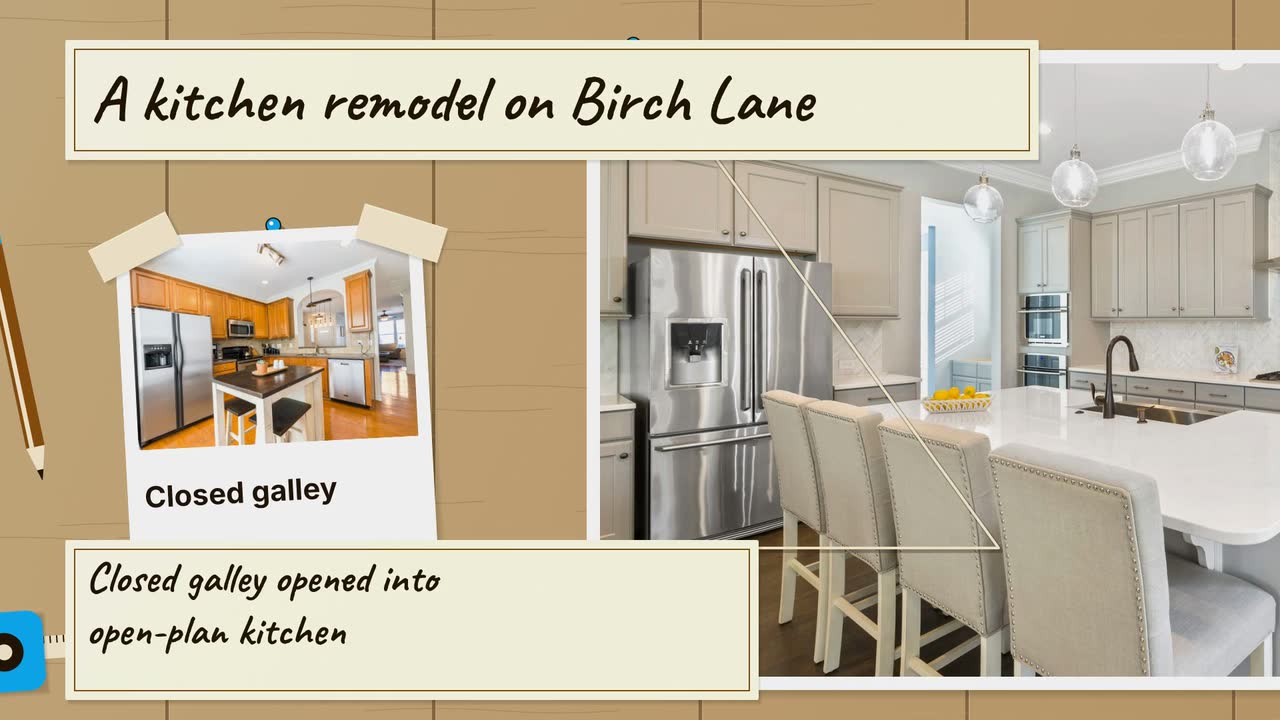
Turn a kitchen job into a clear process story: six video angles, a sample brief, and checks that keep drawings separate from real project evidence.
Tell the Attain OS team what you want to make.
Videos Creator is coming to Attain OS. You can create your Attain OS account today.