Health care
Dental practice marketing videos: answer the questions before booking
Turn front-desk questions into dental videos: explain insurance, visit costs and booking without exposing patients or promising treatment results.
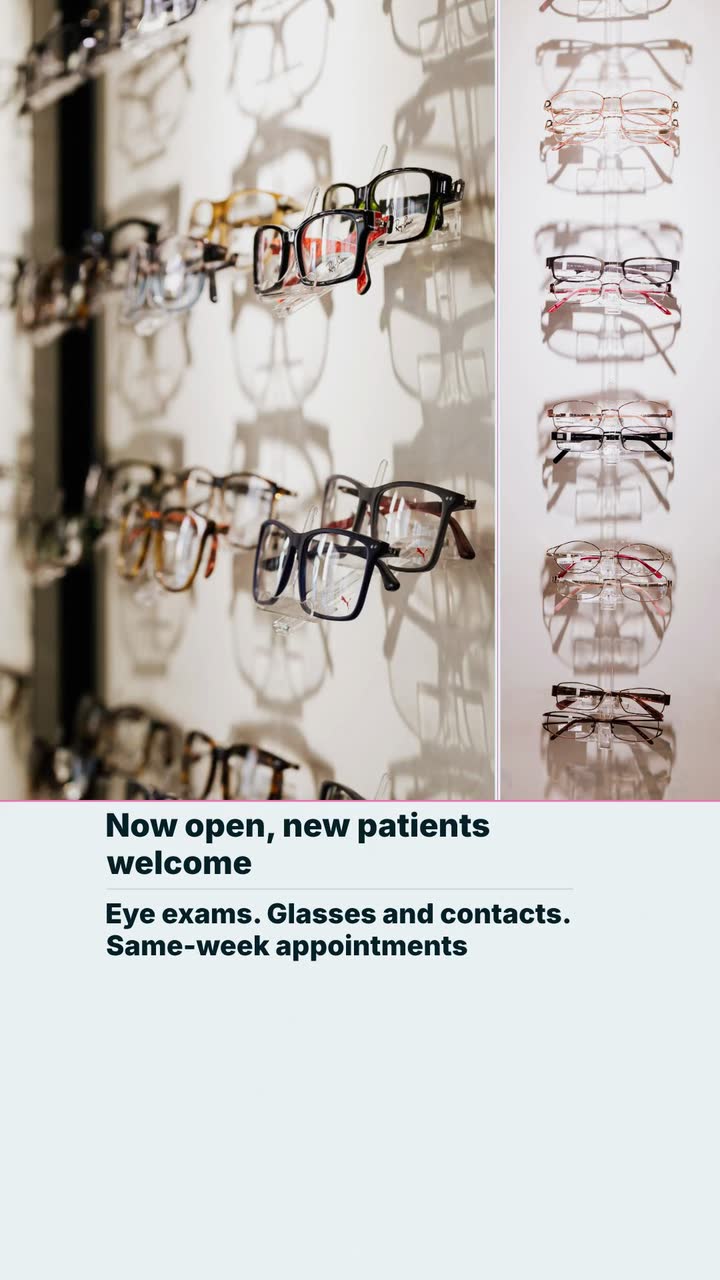
These optometry practice video ideas are for independent optometrists, optical shops and the front-desk team managing their social posts. You get six clip plans, a seasonal schedule and a worked welcome video for an invented practice. Promote examinations only if your qualified clinicians provide them. Legal and benefits examples concern the United States; elsewhere, check current local rules. This is marketing guidance, not medical or legal advice.
Review reception questions without copying names or medical details into planning notes. Separate visit preparation, booking and eyewear shopping. Choose one question per clip: whether you examine children, what to bring, or whether a frame price includes lenses. Write its answer and booking route first.
Have a clinician approve visit advice. For dilation and driving questions, explain how to ask the practice before the appointment; avoid a blanket driving instruction. Do not diagnose symptoms through a post. Keep routine marketing separate from instructions for urgent concerns.
Real recordings can show a frame's hinge, colour and fit. A drawn frame is an illustration, not an item-in-stock photo. Keep clinical and retail clips separate so someone looking for an exam answer can find it directly.
Each plan gives you a visual, a message and a posting occasion. Record real staff and products separately; they are not inputs to a Procedural Videos brief.
Show the name, one service and one booking route. Say “New patients welcome for adult eye exams” if true. Leave hours in the accompanying post. Publish when appointments open. The Now open template (Calm and clear version) is an example brief and storyboard, not a saved product setting.
Record a walkthrough in an empty room, or use a clinician-approved illustrated sequence. Show check-in and the items your practice requests, such as current glasses and a medication list. Say “Ask about visit preparation when booking.” Publish for new-patient intake. Keep real appointment screens out of shot.
Show two cards: “Glasses: after the refractive exam” and “Contacts: after the fitting is complete.” These are US release points (eyeglasses, contacts); check current rules. Say “Ask how you will receive your copy.” Publish as an appointment explainer, not a purchase perk.
Show a school-calendar card and available children's appointments. The AOA recommends exams before first grade and annually thereafter, with earlier childhood visits too (AOA). Do not imply that the first exam should wait until school. Say “Ask when your child should be seen.” Publish before your local term, with clinician-approved wording.
Film one actual frame from the front and side; identify the model. Separate frame and lens prices, specifying lenses in complete-pair quotes. Say “Ask for a quote for your prescription.” Publish while available. The Product hero template (Lookbook version) is an example brief and storyboard; its illustration is not the real item.
Record your optometrist answering “Is a fitting the same as collecting a box of lenses?” Explain your visit and follow-up process. US prescription release follows a completed fitting (FTC); check current rules. Close with “Call about a fitting appointment.” Publish when promoting that service; avoid medical advice in comments.
Use this as a suggested US planning calendar, not evidence of seasonal demand. Replace the months with your school dates, local climate and patients' actual plan periods.
| Planning window | Check before writing | Clip to prepare |
|---|---|---|
| January | Which plans reset now? | “Check your plan dates”; confirm accepted plans first. |
| February–March | What visit-preparation question keeps recurring? | An empty-room walkthrough showing what patients should bring. |
| April–May | Which prescription sunglasses are available? | Record one frame; separate frame and lens prices. |
| June–July | How do patients order before travel? | Explain spare-pair quotes and collection; confirm dates before promising them. |
| Before the local school term | Which ages and slots do you offer? | A school reminder with clinician-approved wording (AOA). |
| September | Which appointment hours are confirmed? | Show hours and booking instructions, without screen-related cure claims. |
| Before a relevant plan deadline | What must the administrator confirm? | Coverage dates, eligible expenses and grace periods (IRS); check current rules. |
| December | When do consultation and dispensing close? | Publish separate holiday hours and collection instructions; retire outdated notices. |
In the US, the FTC requires an eyeglass prescription immediately after a refractive exam, before offering glasses for sale, even if the patient does not ask. A purchase or extra prescription fee cannot be required (Eyeglass Rule). Check the current FTC guidance and state rules before quoting this in an ad.
A contact lens prescription follows a completed fitting, which may involve follow-up. The release cannot be exchanged for a purchase, extra fee or waiver (Contact Lens Rule). Check the current guidance; “You leave every visit with a contact lens prescription” is unsuitable copy.
A discount on an exam-and-glasses bundle is a different issue from withholding a prescription. The FTC explains that a bundle can be advertised while leaving patients the choice to pay the routine examination cost and take their prescription elsewhere (FTC bundle guidance). Ask your adviser to review the offer against current local rules, including the separate exam price. This is not legal advice; leave release paperwork and recordkeeping to the practice's compliance process.
The FTC's health-product guidance covers social advertising and requires scientific support for health claims; quoting a testimonial does not remove that responsibility (FTC). Check current advertising rules with your adviser.
Invented ClearView Eye Care promotes one service. The text-only example uses the Now open template (Calm and clear version), an example brief and storyboard.
A 15 s welcome video for ClearView Eye Care, an invented optometry practice. New patients welcome for adult eye exams. Saturday mornings available. Format 9:16, style build; calm pacing, English narration, music and sound effects. Colours #155e75, #f472b6, #ecfeff. Large text and calendar shapes. End with “ClearView Eye Care · Call to book”. Suggested narration: “ClearView Eye Care welcomes new patients for adult eye exams. Saturday mornings available. Call to book.”
| When | On screen | Why |
|---|---|---|
| 0–3 s | “ClearView Eye Care” and “New patients welcome” on the pale background. | Establish the practice and who the invitation is for. |
| 3–8 s | “Adult eye exams” in large teal text. | Give one service enough reading time; no crowded list of treatments. |
| 8–11 s | A simple calendar shape beside “Saturday mornings”. | State the invented practice's useful scheduling detail. |
| 11–15 s | “ClearView Eye Care · Call to book”. | Hold the business's own close; use its verified phone number when adapting the example. |
| Outro | The ProcVideos outro closes the video. | |
Review the generated service, pacing and close; each generation differs. Regenerate with feedback if needed. Narrated output includes an SRT file; check captions when publishing. The brief is text only; real recordings stay separate. Videos Creator is coming soon to Attain OS.
Try a brief like this one
Videos Creator is coming to Attain OS. You can create your Attain OS account today.
Assign clinical wording to a clinician and hours, prices and booking details to reception. Approve both before posting.
Answer the question reception heard most this week. Have a clinician approve any clinical wording and give one booking route. Follow with a real frame demonstration separating frame and lens prices. Choose a manageable posting schedule; do not promise it will produce appointments.
The FTC allows a bundled offer, but patients must still be able to pay the routine examination cost and leave with their prescription without buying glasses ([FTC](source:1)). Have an adviser check the current state and advertising rules and the actual offer wording. This is not legal advice.
The AOA recommends exams before first grade and annually thereafter for school-age children, with earlier childhood visits too ([AOA](source:3)). Attribute this recommendation and let your clinician adapt it. Do not suggest waiting until school when a parent has a concern.
For HIPAA-covered US practices, marketing uses of patient information generally require prior written authorization, with limited exceptions ([HHS](source:9)). Blurring later does not cure unauthorized media access ([filming guidance](source:10)). Check current privacy rules with your adviser before recording; this is not legal advice. Prefer an empty-room or staff-only clip.
To the booking page for the named service. Business Profile supports providers or your own booking link ([Google](source:7)); test it on a phone. Do not request medical information in public comments. For opening-day planning, see the [new-clinic opening guide](guide:new-clinic-opening).
Example templates
An example template is a sample brief and storyboard for one kind of video, in one style, format and length.
Rules and platform features change. Check the source before you rely on it.
Health care
Turn front-desk questions into dental videos: explain insurance, visit costs and booking without exposing patients or promising treatment results.
Health care
Follow an invented family clinic from opening brief to launch posts, with checks for insurance wording, patient privacy and booking.
Health care
Thirteen clinic video ideas built around reception questions, with consent checks, a posting plan and a focused microchip scan example.
Health care
Make first-visit, referral and rehab-process videos with clear boundaries. A clinic checklist, five patient-specific ideas and a concise sample brief.
Tell the Attain OS team what you want to make.
Videos Creator is coming to Attain OS. You can create your Attain OS account today.