Food and drink
Restaurant video marketing ideas: twelve clips for your next service
Twelve restaurant videos built around service: sell a special, explain last orders, promote a group menu and keep each offer accurate.
For salad bars, grain-bowl counters and plant-based cafés, useful videos answer lunch-counter questions: what comes with the bowl, which dressing is included and where to collect an order. Use these recipe checks, nine video ideas and a posting workflow to answer those questions. A worked brief for an invented kitchen shows how to explain one dish without promises about weight loss or treating illness.
Keep the current recipe, supplier labels and menu beside you. Recheck when a dressing, supplier or portion changes.
These US sources are starting points, not legal advice or a ruling on your video. Check current rules where you sell, including the requirements for the particular claim and context.
| Wording to review | What the source actually establishes | A practical alternative |
|---|---|---|
| Healthy | The FDA’s updated food-label definition includes food-group criteria and nutrient limits (FDA). Its packaged-food overview is not a checklist that clears a restaurant ad. | Describe “brown rice, roasted squash and sesame greens” without declaring the dish healthy. |
| Low fat, low sodium, light | US restaurant foods bearing nutrient or health claims need supporting nutrition information on request (21 CFR 101.10). Keeping figures is only part of the check. | Describe an available choice such as “dressing served separately”; do not imply it qualifies as low sodium. |
| High protein | “High” describes a nutrient level and requires the applicable criteria; knowing the grams is insufficient (FDA claim guidance). | Name tofu and edamame. Use a verified amount per serving without “only”, “packed with” or a high-protein claim. |
| Plant-based | FDA naming recommendations concern manufactured alternatives and remain non-binding draft guidance (FDA). They do not establish that every dish called plant-based is vegan. | Name the main ingredient and describe the sauce; spell out animal ingredients rather than leaving customers to infer. |
| Vegan | Check the whole recipe and supplier labels, including sauces and cooking fats. Treat ingredient content and shared equipment as separate questions. | List ingredients. Do not substitute “vegetarian” unless you have checked that description too. |
| Detox, clean, boosts immunity | These do not explain the dish. Avoid suggesting a health outcome you have not substantiated. | Name the preparation: “pressed to order” or “roasted squash”, when true. |
Start with a customer question. Keep records so staff and video give the same answer.
Ask staff which bowl causes confusion: an included dressing, a paid protein addition or a pickup location. Answer one question in this post; save the rest for other clips.
Note the serving size, included components and extra charges. For nutrition figures, record the calculation method, recipe version and dressing quantity. Recheck after substitutions.
Film the actual serving when appearance matters. For a drawn card, use ingredient names, price and ordering information. Procedural Videos takes a text-only brief; your kitchen photos and filmed clips are separate content, not inputs to that brief.
Introduce the dish, answer the chosen question, then explain how to order. Put longer ingredient information in the caption and keep an accessible menu available; avoid a nutrition panel in small moving text.
Try posting before your advance-order cutoff, then at another time during a comparable service with similar availability. Record pickup orders and questions as well as views. Differences are clues, not proof that posting time caused sales.
Give staff the final caption and recipe reference. If a dressing or price changes, correct the caption and replace outdated screen text. For other dish-led posts, see the restaurant video guide.
Pick questions that apply to your menu. Each idea gives a shot, line and publishing occasion.
Show the actual sequence: base, protein, toppings and dressing. Mark included choices and paid extras. Show one complete combination and its total.
Try this: Post when introducing the menu: “This combination includes the dressing; extra avocado costs more.” Use your actual surcharge.
Menu item · Plated dish posterShow the soup, serving size and whether bread is included. Add the date or service so an old clip is not mistaken for today’s menu.
Try this: Before orders open: “Today’s lentil soup; bread sold separately.” The Menu item template (Daily special version) is a brief-and-storyboard example, not a daily-update feature.
Menu item · Daily special buildFilm the labelled delivery and greens being washed or plated. Confirm the farm name and origin; one local delivery does not establish a claim about your entire menu.
Try this: When serving those greens: “This week’s spinach came from [farm name].” Get the farm’s agreement before naming it.
Show one bowl with its default sauce and a checked alternative. Identify the changes and extra charge; treat shared equipment separately from ingredients.
Try this: Answer a substitution question: “Ask for this dressing; here are its ingredients.” Avoid blanket gluten-free or allergy-safe claims.
With reliable nutrition data, compare your own served bowls and stated dressings. Identify paid protein additions. Without those data, compare ingredients and portions.
Try this: When asked about protein: “Here are each bowl’s ingredients.” Add verified grams after checking the wording above.
Film dressing poured onto the standard serving, alongside its ingredient card. Explain whether it comes mixed in or separately. If sold for takeaway, show the bottle size.
Try this: Alongside the bowl: “This dressing is included; ask our staff about its ingredients.”
Show the group-order process, real cutoff, minimum if any, and bowl identification. Use invented names; keep customer details out of the shot.
Try this: Before group service: “Send everyone’s choices together; collect here.” Refer allergy questions to staff; a name sticker is not a safety check.
Show the outgoing and incoming vegetables, start date and price or dressing changes. Follow local harvests and availability rather than a northern-hemisphere calendar.
Try this: Before the change: “Squash replaces [ingredient] from [date].” Update recipe and allergen information before filming.
Film the cook explaining why a grain is cooled before dressing or a vegetable roasted separately. Show your actual method and the result with the standard serving spoon.
Try this: While available: “We roast this separately for crisp edges.” Put ordering details in the caption.
Read as a customer choosing lunch: does the script explain the meal or prescribe feelings about eating?
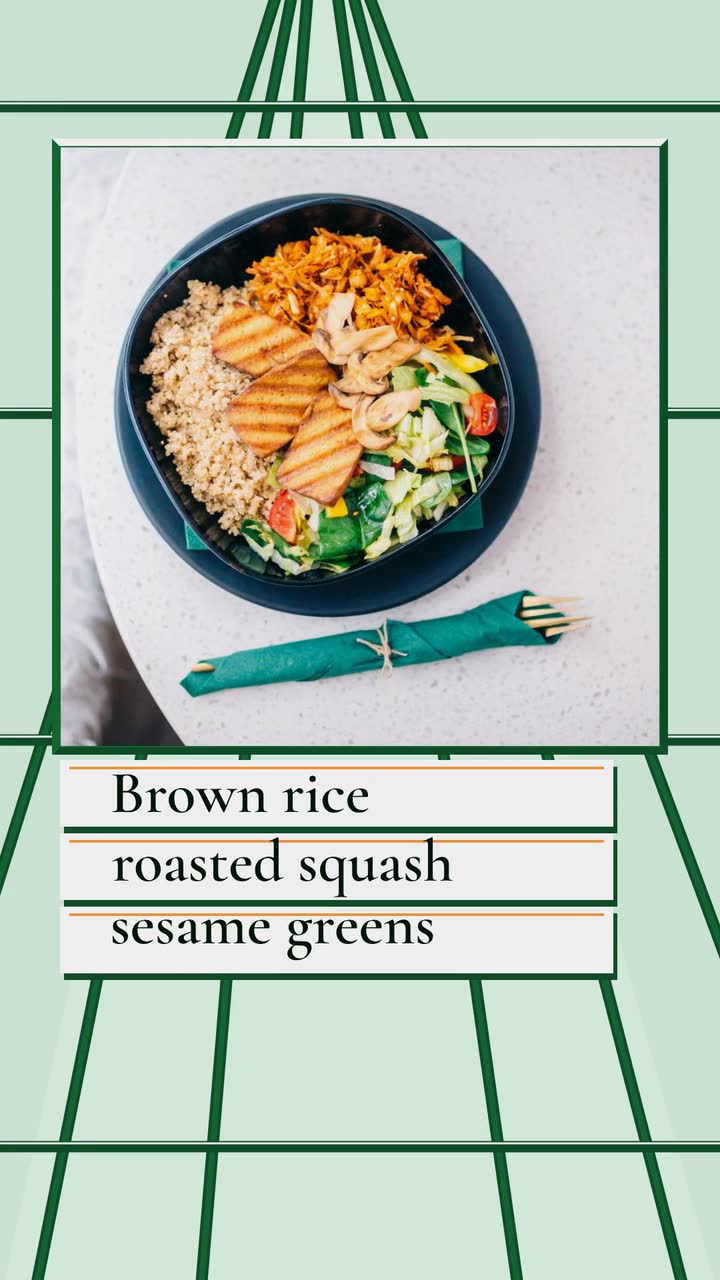
Greenhouse Kitchen is invented, using the associated showcase’s bowl. The Menu item template (Plated dish version) is a brief-and-storyboard example; a longer card allows more reading time.
A 20 s illustrated menu video for Greenhouse Kitchen. Feature the miso tofu bowl, $13, with brown rice, roasted squash and sesame greens. The checked recipe has no animal ingredients and contains soy and sesame. Show a stylized bowl made of simple shapes, not a photograph. Use 9:16 vertical and #166534, #fb923c and #f0fdf4. No narration. Keep “Contains soy and sesame” visible from the ingredient scene through the price scene. Finish with “Order ahead for pickup” and Greenhouse Kitchen.
| When | On screen | Why |
|---|---|---|
| 0–3 s | “Miso tofu bowl” with “Greenhouse Kitchen” above it. | Identify the dish before adding details. |
| 3–10 s | A simple drawn bowl with the labels “brown rice”, “roasted squash” and “sesame greens”; a steady line reads “Contains soy and sesame”. | Keep the ingredient and allergen text visible together; avoid adding a health slogan. |
| 10–15 s | “$13” beside the bowl; “Contains soy and sesame” remains visible. | Give the price its own scene without hiding the ingredient warning. |
| 15–20 s | “Order ahead for pickup” and “Greenhouse Kitchen”. | The business closes on its own ordering action. |
| Outro | The ProcVideos outro closes the video. | |
The allergen statement is for this invented, checked recipe, not every miso bowl. Check text size and contrast on a phone. The text-only brief requests an illustration, not proof of the serving. Each generation differs; request another take with feedback if needed. Videos Creator is coming soon to Attain OS.
Try a brief like this one
Videos Creator is coming to Attain OS. You can create your Attain OS account today.
Do not assume that using vegetables settles the question. The FDA’s food-label overview describes defined criteria ([FDA](source:1)); it does not clear your menu or video wording. Check current local rules and get qualified advice for the proposed claim. Meanwhile, show the ingredients and preparation. This guide is not legal advice.
The cited federal rule concerns menus and menu boards at covered US chains: 20 or more locations, the same name and substantially the same menu items ([FDA](source:6)). It is not a blanket requirement for every social clip. Check current local rules and your situation; this is not legal advice. Voluntary figures should match the served recipe.
Use specific wording instead. “Tofu bowl with sesame dressing” tells customers more than a broad category. If you say there are no animal ingredients, check the sauce and broth too. That ingredient statement still does not answer questions about allergy cross-contact.
Film the normal serving before decorative extras. Place dressing and paid additions beside it; state what is included. Use window light and a close texture shot, then show the whole bowl. Label an illustration as such; it should not stand in for a photograph of the serving.
Show that day’s dish, what its price includes and where to collect it. Put a changing cutoff in the caption. Test another slot during a comparable service and record orders; do not assume January or a particular weekday is your peak without your own evidence.
Example templates
An example template is a sample brief and storyboard for one kind of video, in one style, format and length.
Rules and platform features change. Check the source before you rely on it.
Food and drink
Twelve restaurant videos built around service: sell a special, explain last orders, promote a group menu and keep each offer accurate.
Food and drink
Build a late-night Margherita promo for an invented pizzeria, then adapt it to lunch slices, pickup orders or catering.
Food and drink
Plan food truck videos around confirmed stops, specials and catering inquiries, with a monthly calendar and a taco-menu brief.
Food and drink
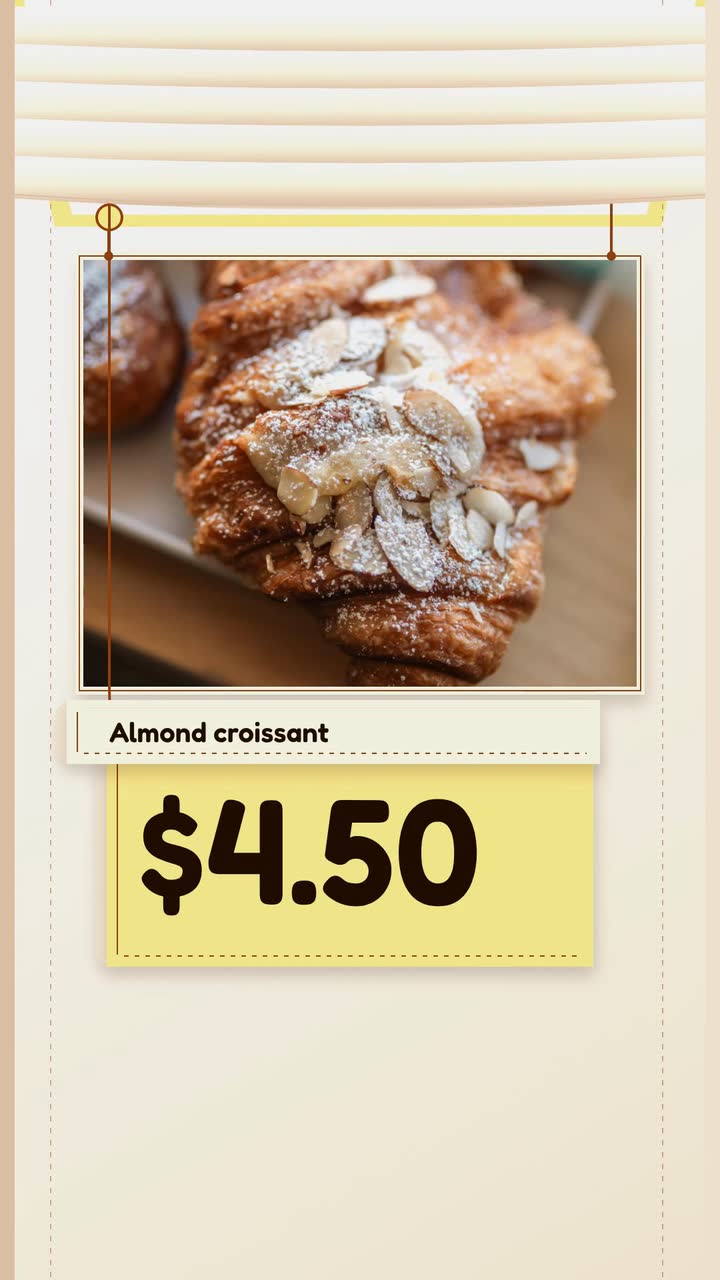
Plan posts around fresh trays, honest sell-out updates and holiday pickups, with a filming checklist and a worked croissant brief.
Tell the Attain OS team what you want to make.
Videos Creator is coming to Attain OS. You can create your Attain OS account today.